‘Sweet was those Notes’
‘Five Somerset folk song arrangements’
by Jonathan Palmer
for SATB choir, solo baritone, choir soloists, flute, violin, cello, and piano accompaniment
“Sweet was those notes that those pretty birds did sing” sang one of the Somerset singers that pioneer folk song collector Cecil Sharp came across over a hundred years ago.
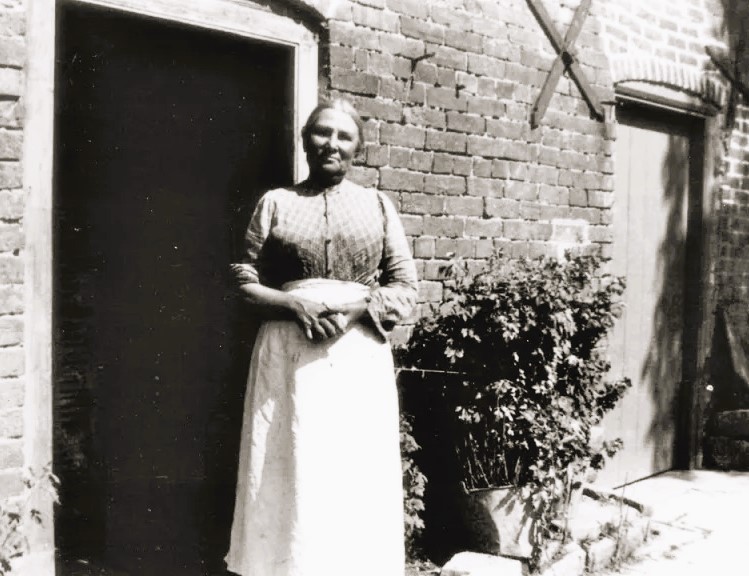
Somerset has a well-documented folk music heritage. It was the British musicologist, Cecil Sharp (1859-1924) who began his career of collecting folk songs in 1903 with the editorial help of his friend Rev Charles Marson, vicar of Hambridge. He assisted and supported Cecil Sharp and wrote introductions to each of the five volumes. Last Autumn, I received a request from a choral society for a new twenty-minute work without professional soloists that would be suitable to include in a June programme with the overall theme of ‘Folk-song’. Summer concerts are often challenging for choirs as they search for lighter repertoire to perform, as a counterpart to the high-powered Masses, Requiems and Cantatas that dominate the rest of the year.
My criteria for their selection focussed on the content of the text with its colourful local vocabulary or the accumulative storyline. The melodic contours are, of course, unchanged, as well as the irregular phrase lengths and modal inflections that can all to be found in the original first editions that were published from 1904 to 1909. Whereas Cecil Sharp chose his harmonies as he thought fit, I have also done the same, my choices often echoing the drama contained in the lyrics. Furthermore, the discovery of rhythmic asymmetry in a song led to a wider enjoyment of such a feature, along with clashes derived from the indecisive use of major/minor or modal features. I make no apologies for the restless key-changing; it helps to generate an on-going momentum, rather like changing gear when you are driving.
My principal aims have been to produce new arrangements that are not too complex and allow mixed voice choirs to learn them quickly, and even to memorise them. As part of the educative process, the audience had to have a role, and in each song they are allowed to contribute, usually towards the end after they have had the time to absorb the melody. Although the songs could be performed without audience involvement, I feel that much would be lost. The image of a folk-song singer is that of a soloist without any accompanist, and it is that concept that is viewed as the ‘authentic’ one. Indeed, many of the songs that Cecil Sharp notated were performed by willing singers who simply reproduced what was in their heads at the time, without any accompaniment. In order to share his collection, Cecil Sharp gathered and edited the songs, organising them into a collection of five volumes, all with piano accompaniments devised by him. One of his big aims was to get folk song into the education system, an aim which was not shared by all of the collectors. In these arrangements, my accompaniments are all independent from the singers and rarely is the vocal line doubled.
When it comes to the number of songs he collected, Cecil Sharp stands head and shoulders above any other English collector. He and others recorded songs and dances which otherwise may have been lost, providing a rich seedbank of material which has provided pleasure and artistic inspiration to thousands if not millions of people. It is, without doubt an important part of our national heritage, and hopefully, the songs in this new collection will be learnt, enjoyed and shared not just by those in choirs, but also by the audiences that also take part – an educative process of which Cecil Sharp would have approved.
These are the songs I chose: -
The Brisk Young Widow, Fanny Blair, Sheep Shearing Song, Bruton Town, Wassail Song
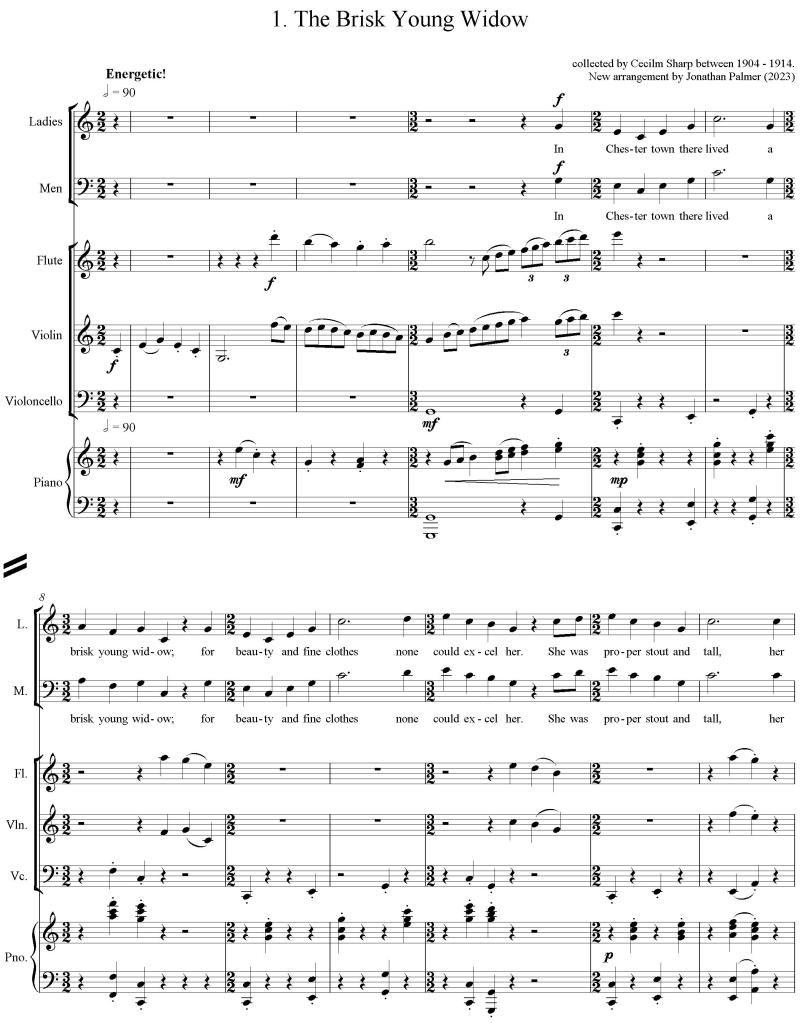
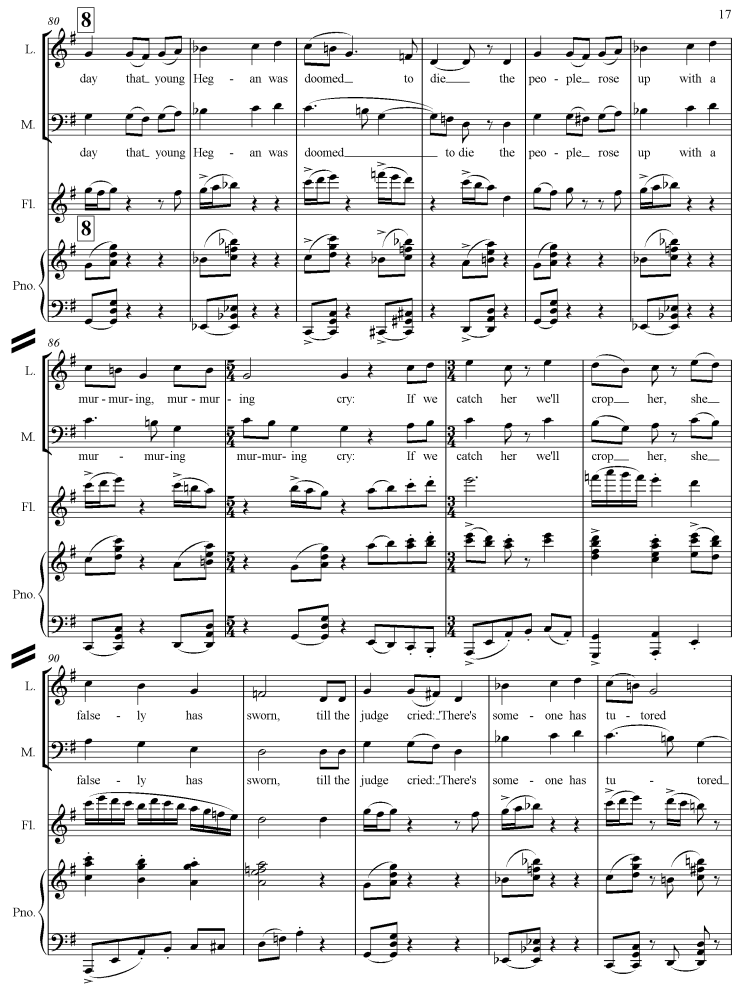
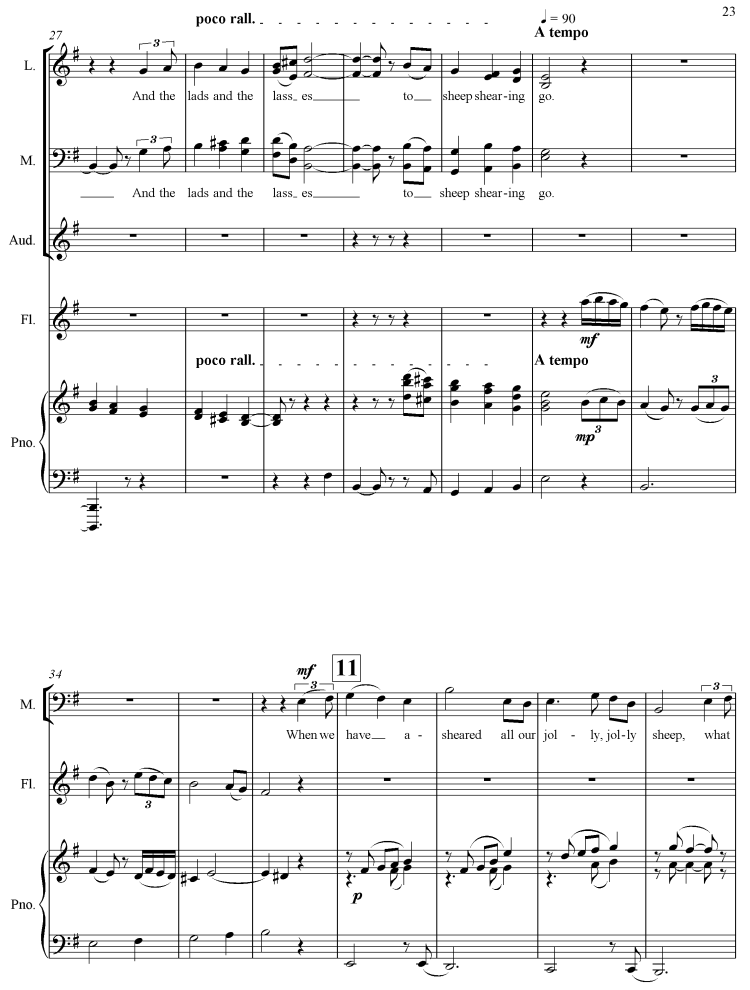
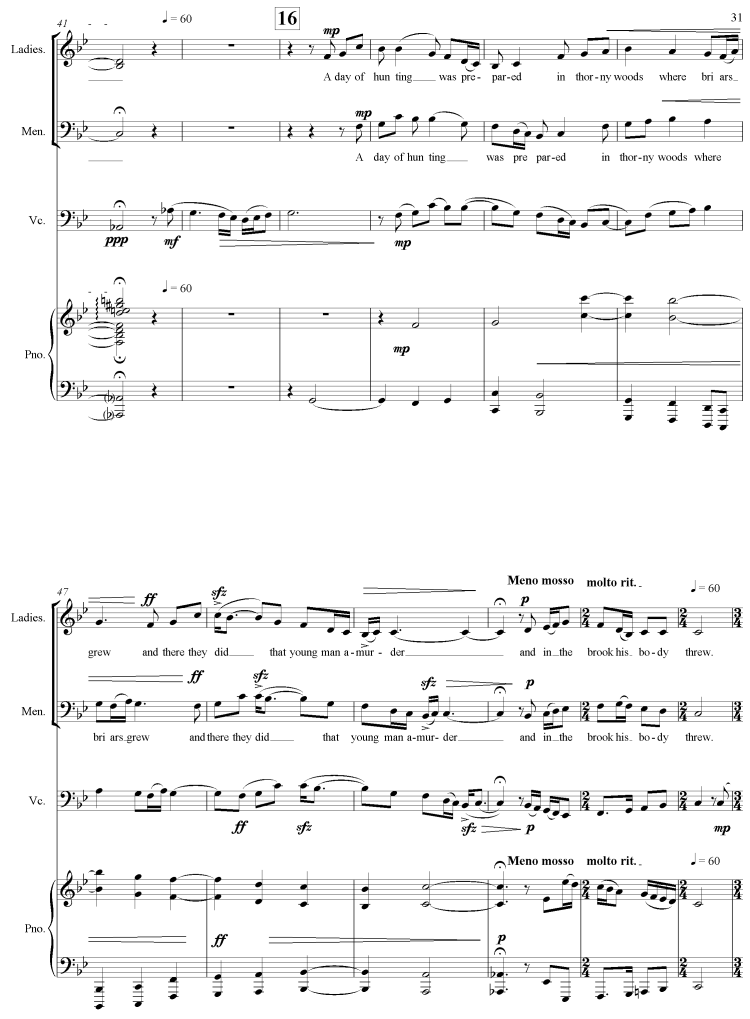
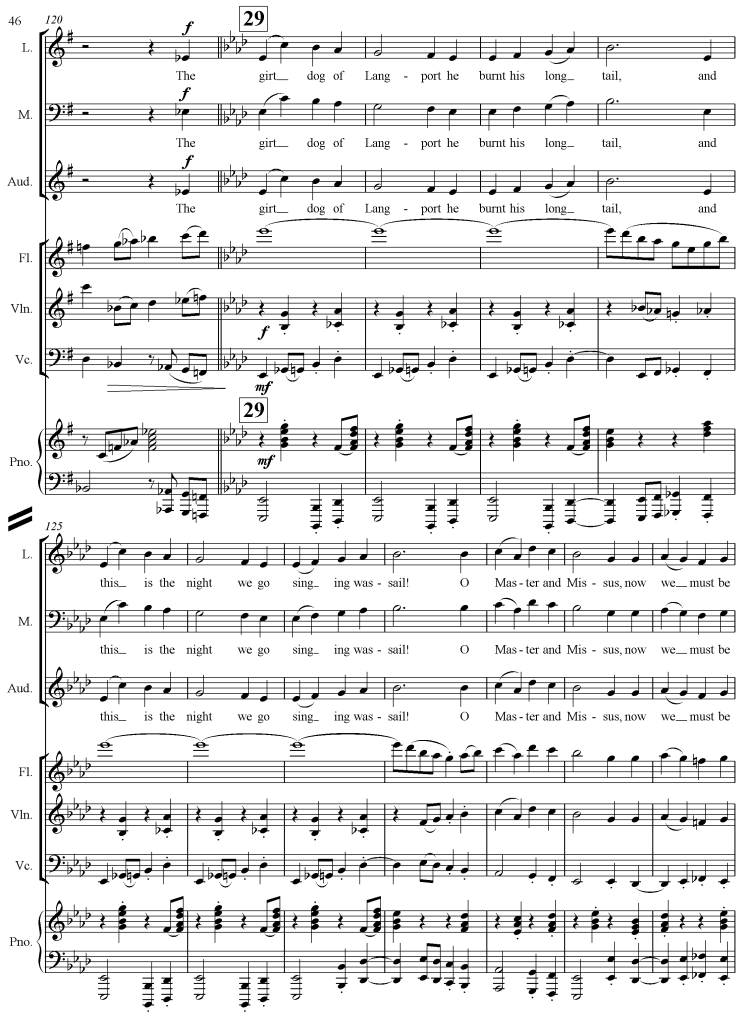
Here are some short extracts from the score, along with a live recording of the original premiere.
No 1: The Brisk Young Widow
No 2: Fanny Blair
No 3: Sheep Shearing Song
No 4: Bruton Town
No 5: Wassail Song
Summer concerts are often challenging for choirs as they search for lighter repertoire to perform, as a counterpart to the high-powered Masses, Requiems and Cantatas that dominate the rest of the year. Following the successful first performance by Portishead Choral Society on June 8th 2024, ‘Sweet was those Notes’ is now available to any choir that would like to include it in their concert programme for 2025 and beyond. You can listen to it above; why not request a score?
Why should you choose to perform it?
- It was written specifically for amateur singers and is easy to learn
- Memorable tunes and minimal harmony
- Audience participation
- Opportunities for choir soloists
- Free instrumental parts, recordings, programme notes, audience word sheets
- It is suitable to be performed at any time of the year
- Vocal scores available at low price
- Any profits from printing or concert proceeds to ‘Somerset Wildlife Trust’
- Use the ‘Contact’ page to send me an email.
 Jonathan Palmer - Composer